 English
 Italian


Maserati GT2 Stradale | Test Drive
There are cars you simply cannot get out of your mind. They come and go, yet leave a deep imprint on the soul of those who were almost beginning to forget what driving is truly all about, suffocated by screens and acceleration figures now within reach of virtually any electric crossover. The GT2 Stradale is one of those rare gifts from heaven: a car that brings back the purest pleasure of driving, delivering a brutal shot of adrenaline and aerodynamics that pull absolutely no punches.
Words Alessandro Marrone / Photos Bruno Serra

In 1898, a certain Gaston de Chasseloup-Laubat set what is universally recognised as the first genuine land speed record. It happened in Paris, behind the wheel of a Jeantaud Duc, a small electric car (yes, you read that correctly) capable of reaching 63.15 kph. Just imagine what that really meant back then: taking on something that was still entirely unknown. It was about discovering sensations never experienced before, born out of the awareness of having pushed beyond familiar limits and the satisfaction of embarking on a journey that would continue to unfold over the years. Always pushing further, in a relentless pursuit of a finishing line that, in reality, does not exist. An undefined destination in an endless race called speed, a force that has been both glorified and cursed in equal measure, because it has always represented that fine line between victory and defeat, life and death.

Today, Gaston de Chasseloup-Laubat’s record could be matched by a derestricted, modified electric scooter. But if, in 2026, we are bursting with social-media arrogance and cynicism, what we seem to have lost is a genuine hunger for excitement. Speed, as we were saying. An absolute benchmark, certainly, and one on which much of the kind of pub talk that is often difficult to substantiate on everyday roads tends to revolve. Yes, because we are not all racing drivers, nor do we all live at a racetrack. A car – because that is what we are talking about, after all – must be capable of more than simply going fast. And when the automotive landscape is more crowded than a Monday market and press releases are full of bold claims and promises worthy of the worst dystopian science-fiction movie, there is still only one way to find out whether we are dealing with a truly great car.

The phone suddenly rings. I answer and, at the other end (nobody has used an old-fashioned telephone receiver for goodness knows how long, but it sounded good on paper), the guy who was supposed to deliver the Maserati the following day tells me he is just around the corner from the office. All sorts of things can happen unexpectedly; it is part of the game. But having the car delivered to your doorstep a full day ahead of schedule is something rather (pleasantly) unexpected. Hit fast-forward and, less than a couple of hours later, I find myself sitting in the cockpit of one of those cars you never thought you would be lucky enough to drive, simply because it is so utterly unexpected: the GT2 Stradale.
The less imaginative call it “a track car let loose on the road”, while those who fancy themselves the next George Lucas might describe it as “a track car for everyday use”. In reality, the name Maserati has chosen perfectly captures the origins of this MC20 derivative, which sinks its claws deep into the world of racing. The MC20 and GT2 come together to create a machine that makes no secret of its sights being set on hardcore supercars such as the Huracán STO, 911 GT3 RS and 296 Speciale. An exclusive club that is notoriously difficult to join, where your place at the table must be earned through hard work on the road and, naturally, on the track. There are no discounts and no half measures here. Abandon all hope, ye who take your seats, because this is serious business.
Speed. An absolute value, defined with mathematical precision by the number of kilometers covered in one hour. Let’s cut to the chase: there is no road long enough (or safe enough) to push the Stradale all the way to 324 kph. And I am convinced that most of you will agree when I say that speed is not everything. That enormous rear wing is proof enough. So what does the GT2 need to measure up to Jeantaud Duc and write its own important chapter in automotive history? I will tell you exactly what, and, more importantly, how to find out in the most scientific way possible.

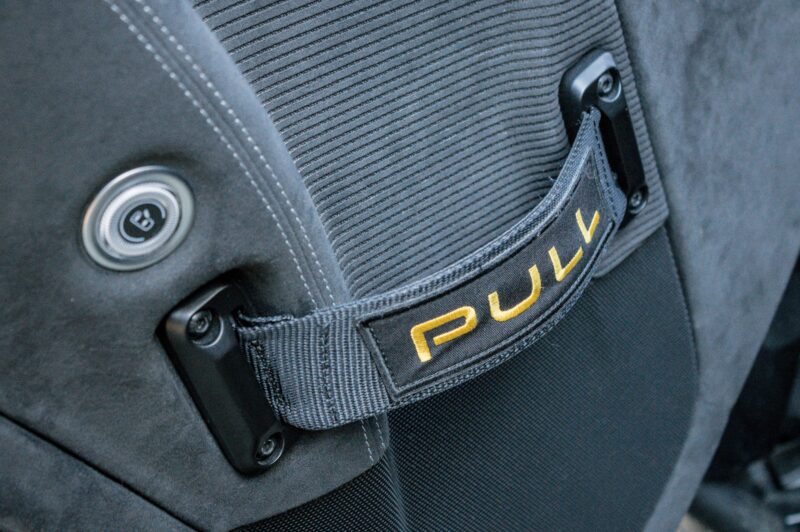
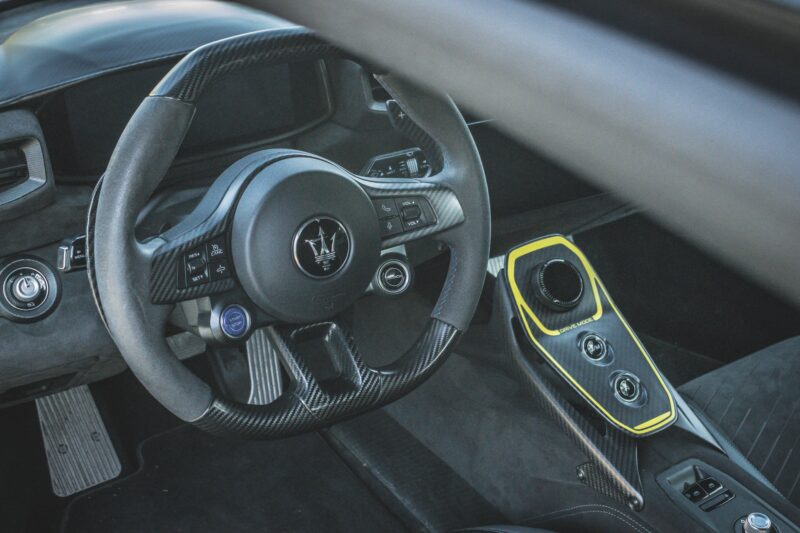
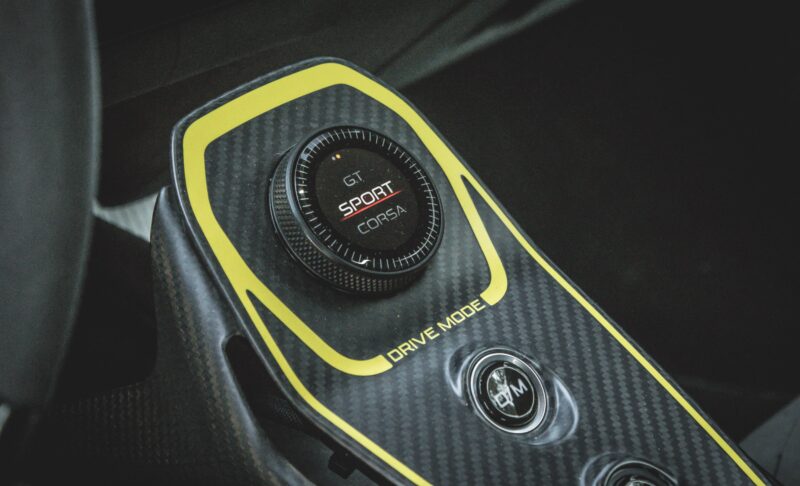
I fasten my seatbelt. The four-point racing harnesses are optional, as are the bucket seats with reduced padding. I press the start button on the steering wheel and let the Nettuno engine invade the cabin like a thunderclap breaking the silence of an otherwise ordinary afternoon. After just a minute or two, the rev counter settles slightly lower. I check the side mirror adjustments – the rear-view mirror also benefits from a camera mounted at the back – turn the driving mode selector to Sport, select manual/sequential operation for the gearbox and ease off the brake pedal. I recall that one of the things that impressed me most about the MC20 was precisely its brake feel: decidedly racing-oriented and considerably more raw than that of other road-going supercars.
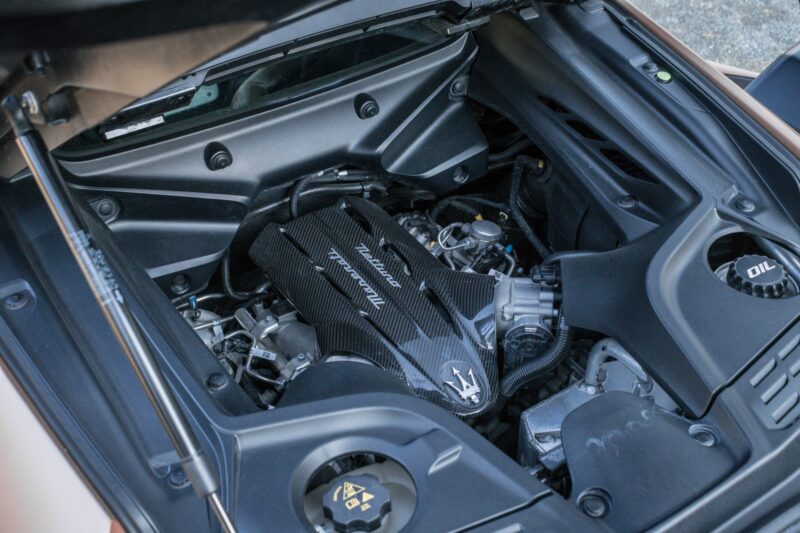
I ease onto the gas and, with the delicacy of someone about to cover their first few meters behind the wheel of a car of which just 914 examples have been built, I feel the clutch engage. Its metallic sound seems to travel upwards from my feet, through my legs and all the way into my back. The GT2 hints at a few mechanical vibrations – exactly the kind we love – and as I shift into second, the V6 holds at 2,000 rpm, accompanied by a deep howl that sets off the alarms of parked cars. Those dull saloons nobody cares about, yet which, in the grand scheme of things, make infinitely more sense than something so flamboyant, uncomfortable and expensive. There is nothing else on my mind but finding a road that will allow me to bury the throttle. Before long, the alarms are drowned out by all the noises that accompany everyday driving. From gravel bouncing off the flat underbody to the hiss of the twin turbos whenever the road forces you to lift off earlier than you would have liked.

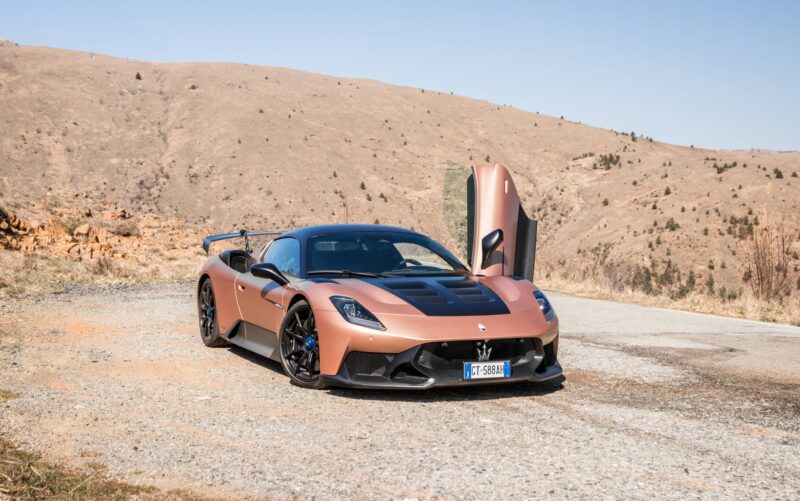
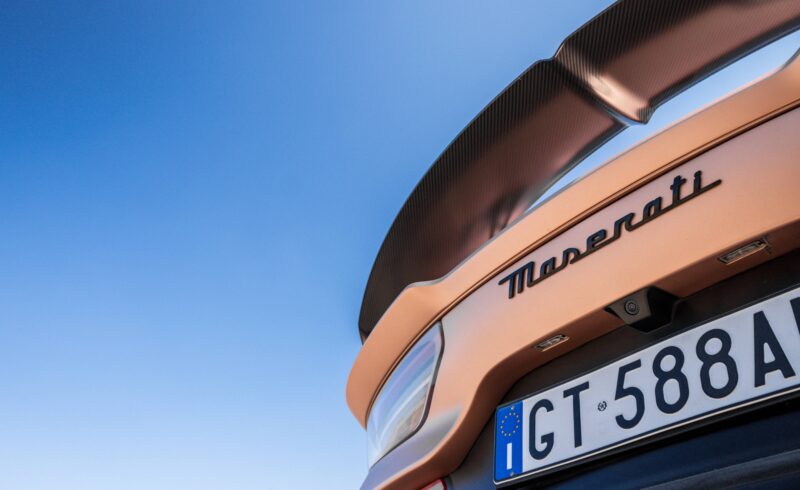
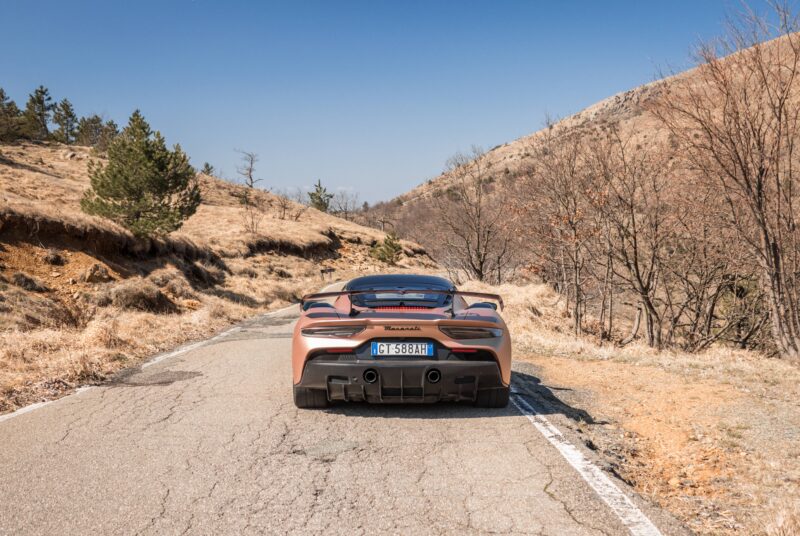
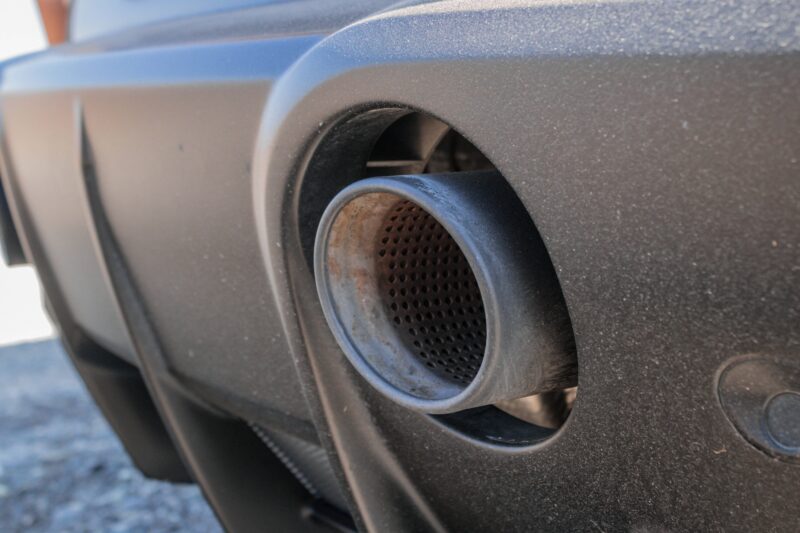
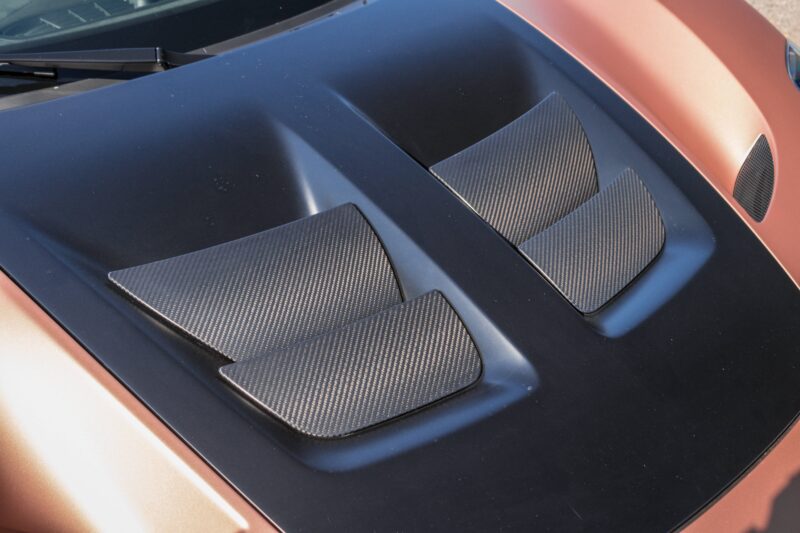
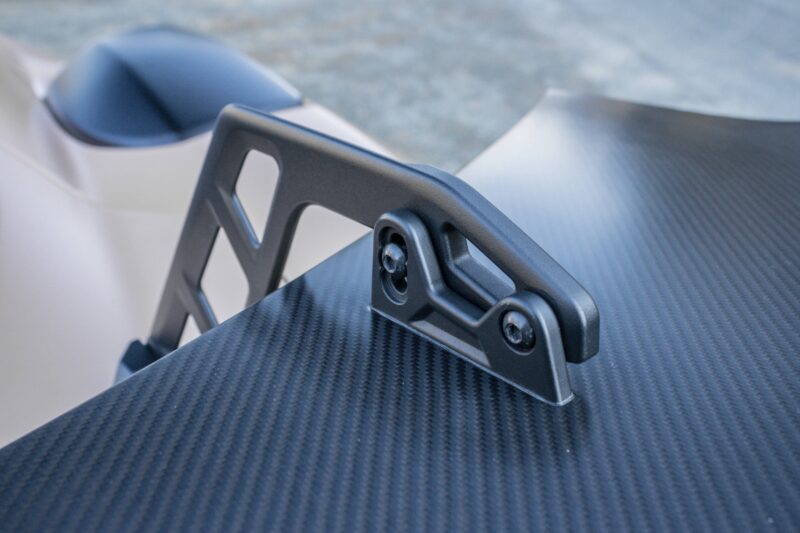
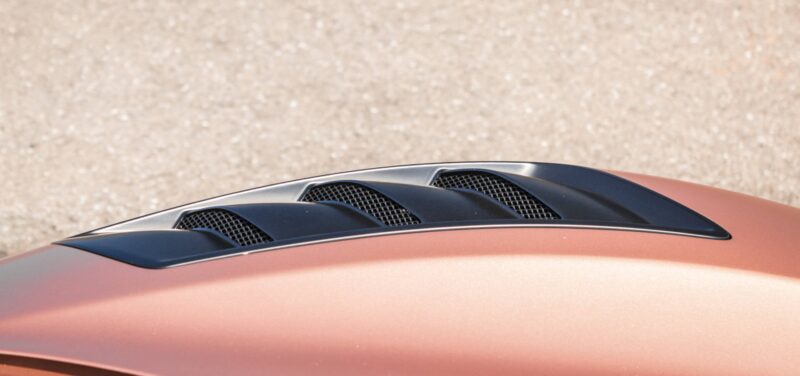
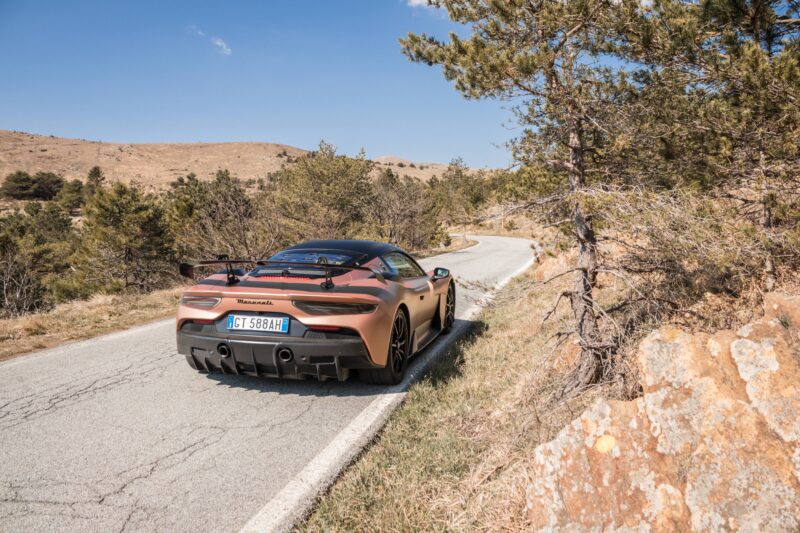
The GT2 Stradale is an out-of-place object. Nobody, and I mean nobody, can resist following it with their eyes, helped in no small part by its copper-toned Fuoriserie livery, which contrasts beautifully with the black carbon fiber and front panel. The differences compared with the MC20 are enormous; there is absolutely no chance of confusing the two. So much so that, as you will see, it almost seems unfair to call the standard MC20 and MCPura “ordinary”. Up front, as mentioned, there is a bonnet lightened by two sets of horizontal air vents. There are aerodynamic outlets on the front wheel arches, the vents ahead of the rear wheels are larger, and the rear wing is adjustable to three positions, sitting above a pair of exhaust tips and an equally conspicuous diffuser. If there are no half measures when it comes to styling, the increase in maximum power is somewhat less daring than we might have expected. The 3.0-liter Nettuno engine produces just 10 additional horsepower, bringing the total to 640 hp, while peak torque is actually down to 720 Nm from 730 Nm. The reason lies in the engine’s optimised power delivery for track use.
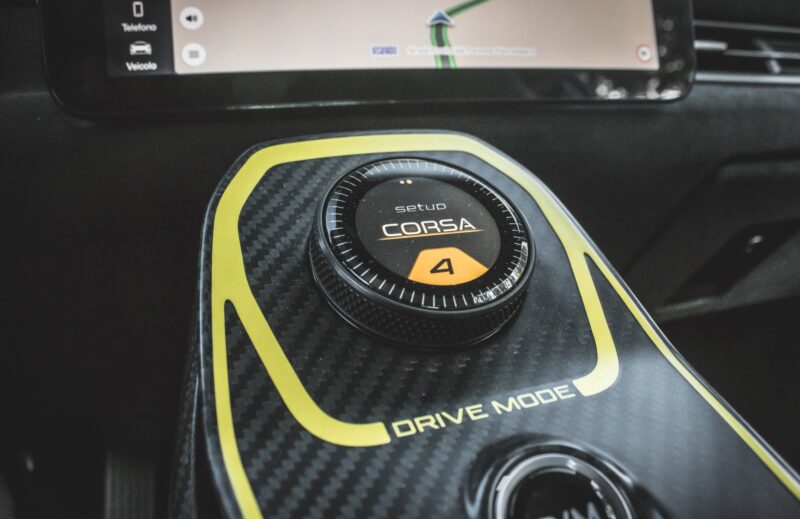
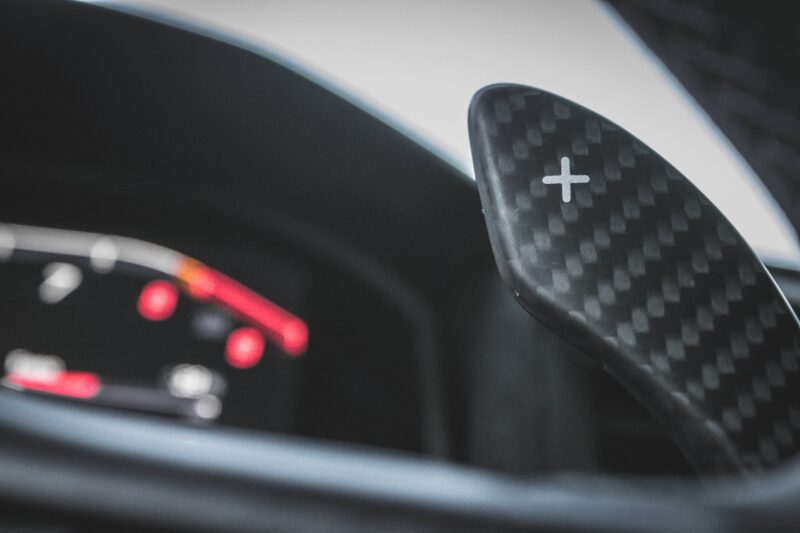
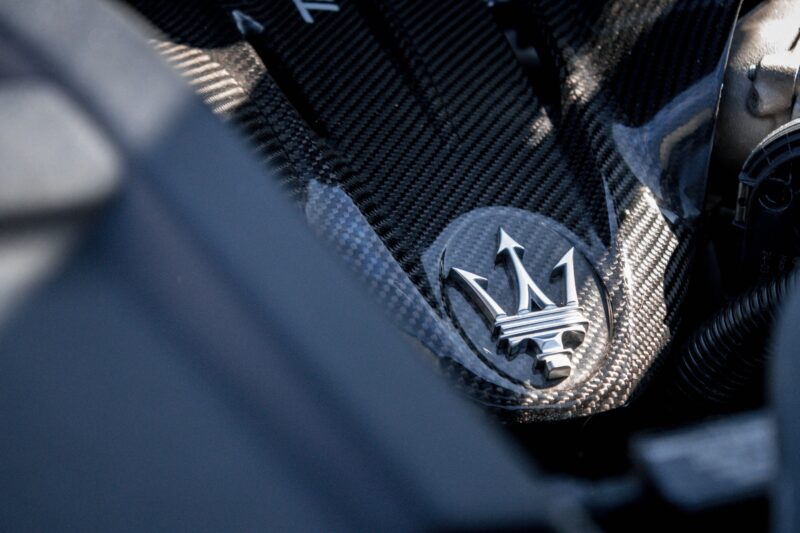
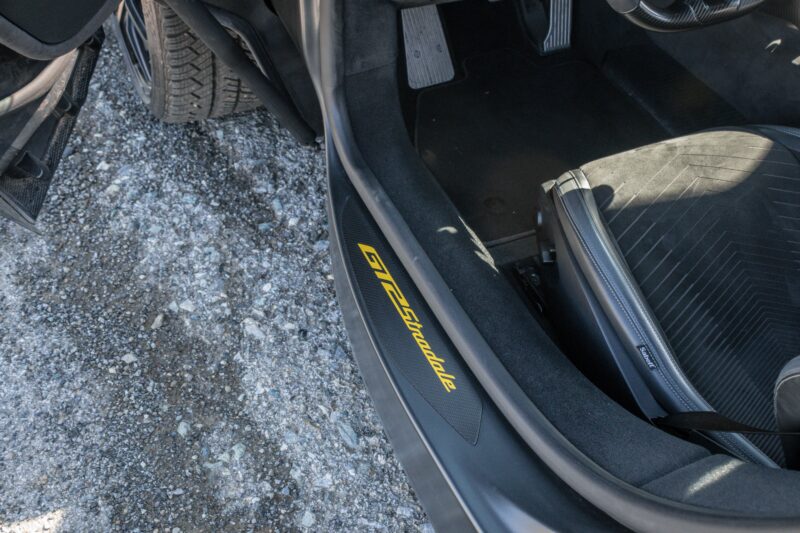
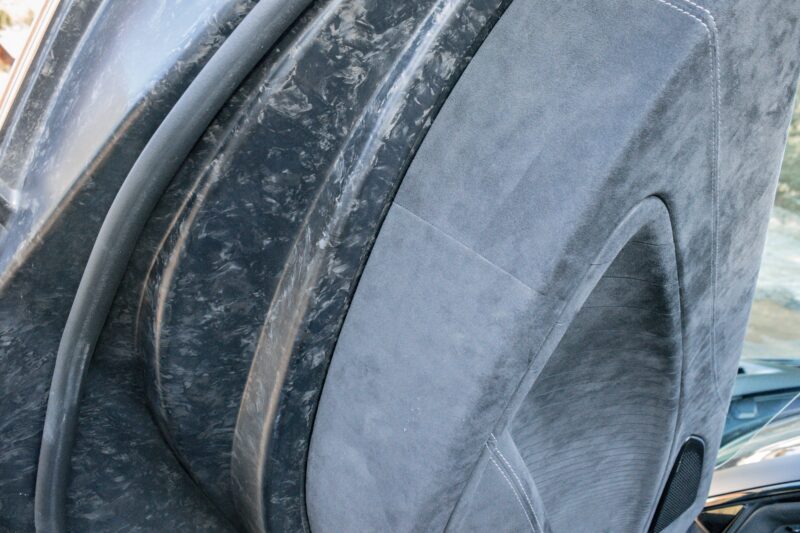
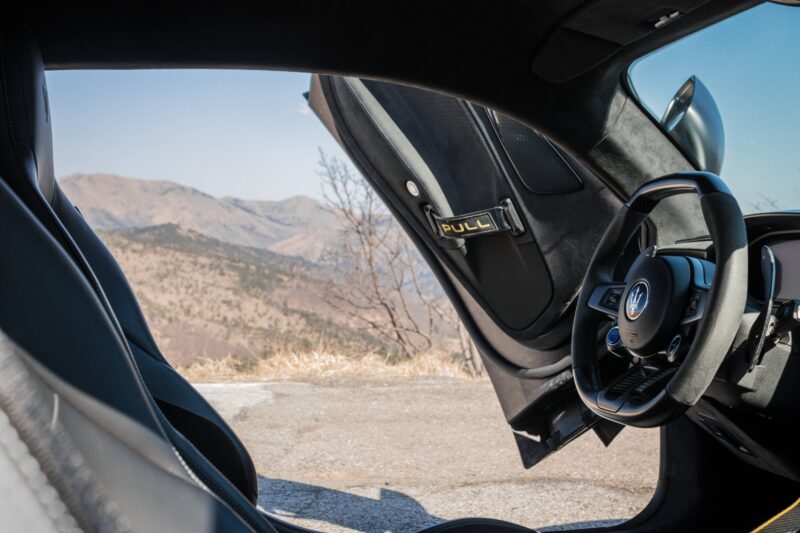
And this is precisely where I draw the line. To me, it is clear that Maserati has chosen not to take the “easy” route of simply increasing power. Instead, it has preferred to focus its efforts on a more specialised area: the chassis and everything that makes the GT2 Stradale a sharper tool, particularly in situations where outright speed is not the only value worth pursuing. The powertrain remains unchanged, and the chassis is still the same carbon-fiber monocoque, which is quite astonishingly beautiful to look at with its upward-opening door raised, further enhanced by the lettering on the door sill.

As soon as the road opens up and I feel reckless enough to mistake one of the few mountain roads not yet monopolised by snow for the Mugello circuit, I drop a couple of gears and stretch my right leg towards the floor. The GT2 delivers instantaneous thrust. It feels like being thrown off the top floor of a skyscraper with a legion of cast-iron elephants chained to you. It is violent, yet that brutality is kept in check by raw, unfiltered feedback that reminds you the name is not the product of a marketing department, but the natural answer to a question nobody would ever have thought to ask. We were promised the Folgore – the all-electric MC20 – and instead we got the GT2 Stradale. Not bad, is it? What we did to deserve it is irrelevant, especially since I am far too busy keeping the car on the road to engage in any more complex thought than staying clear of the trees lining the roadside.

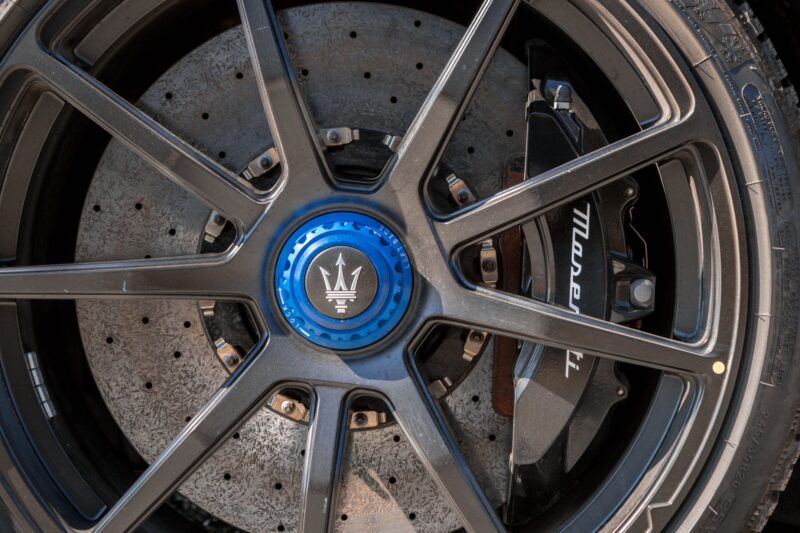
In a fast car, the landscape becomes a blur. In a car like this, it disappears altogether. You are swallowed by a carbon-fiber thunderclap, moving in a way that seems entirely unnatural for something that is legally allowed on public roads and comes with a number plate and insurance. Yet that is exactly what it is. The steering is precise, and across the upper section of the steering wheel, more carbon fiber is interrupted by LED shift lights telling you when it is time to slot into the next gear. If you have the nerve, you can work your way through all eight gears, always within fingertip reach thanks to the large paddles fixed to the steering column. But you need courage, and above all, space. A sharp corner approaches, and the numbers on the speedo do not exactly promise to get me home in one piece. I literally throw myself onto the brake pedal, and the carbon-ceramic brakes do what they do best. They may not be the ideal choice around town, but on track and under sustained heavy use, they are the only safety net that allows you to exploit the GT2’s potential to the fullest.

Gaston de Chasseloup-Laubat would probably be laughing his head off and would undoubtedly keep his foot buried on the throttle far longer than I ever could, despite the road being closed to traffic and my being fully aware that I am sitting in a missile worth several hundred thousand euros. Through the faster corners, the car remains glued to the ground, generating up to 500 kg of downforce at 280 kph. The enormous difference in aerodynamic pressure between the MC20 and GT2 Stradale is apparent even at more modest speeds. You understand it physically, as your body senses precisely how every aerodynamic appendage channels the airflow exactly where it needs to go. Every bump sends a vibration through the car, and you need to keep a firm grip on the steering wheel, particularly when you stamp hard on the gas coming out of a corner.
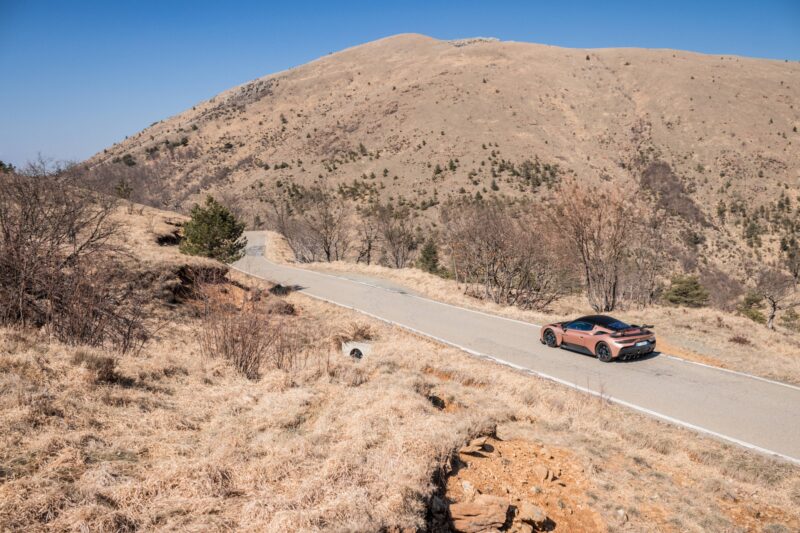
Having access to such colossal grip also means that the margins for error become harder to manage. Think of any car chase from an American movie made in the 1970s or 1980s. Remember how those enormous saloons seemed to glide around on inflatable mattresses, drifting sideways all the way to the closing credits? The GT2 is the exact opposite. And if the rear end steps out under power, you had better hope it was intentional, perhaps on the exit of a very slow hairpin. Just like a proper racing car, it was never designed to slide around and destroy its tyres in some improvised gymkhana. It is one of those machines conceived to shave thousandths of a second off a lap time, and as such, it demands that you read the road (and the track) according to the logic of the perfect racing line.
At the rear, there is a mechanical limited-slip differential, although an electronically controlled version is also available, depending on your requirements. The Performance Pack represents a further step up, intended for customers who see the GT2 not simply as a hardcore derivative, 60 kg lighter than the MC20, but as a dedicated track tool. In that case, having a number plate is entirely beside the point. On the road, however, you can appreciate just how usable a car of this kind really is. Forget about the weekly shop: there is no room left at the front even for a lemon, while whatever little you can squeeze in behind the engine will inevitably get overheated. The cabin is comfortable, and getting in and out is easier than in a Lotus, but the sheer width and poor three-quarter visibility do little to encourage you to tackle narrow streets or city centers.

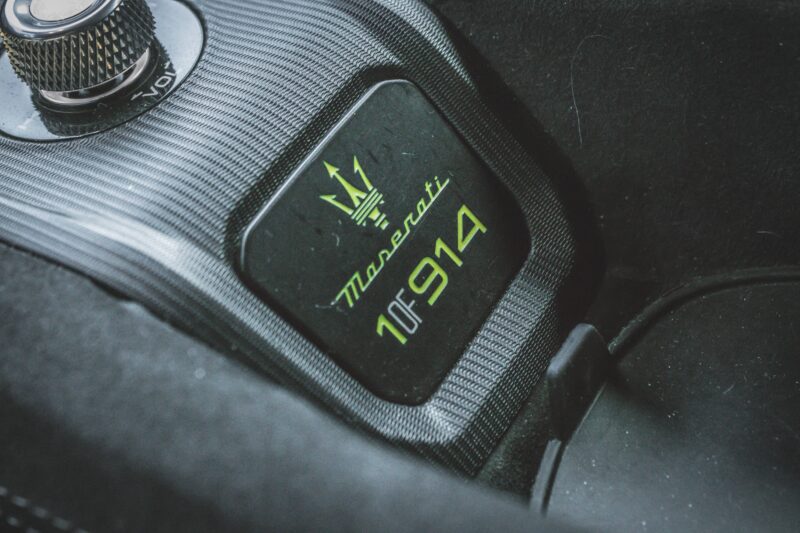
At this point, I find myself wondering whether any of that really matters to anyone. I mean, are we still talking about comfort, fuel consumption and prices when dealing with machines like this? Why on earth should we? This is the lifeblood of a world built around emotion. It is simply about enjoying a machine that celebrates the glorious past of the Trident brand. After all, the “1of914” plaque is a direct tribute to the year the company was founded. Every day spent behind the wheel, every moment devoted to admiring its lines, is a gift. Like the first ray of sunshine breaking through the clouds once the universal flood has finally subsided. The GT2 Stradale is the perfect storm for a brand that, now more than ever, offers some of the most interesting and capable models one could possibly wish for. The GranTurismo is a clear example, as is the MCPura. The GT2 Stradale, quite rightly, takes things a step further. This is true even though, on closer and more critical inspection, it does not present us with a machine that is light years away from the MC20. But perhaps that is down to the extraordinary quality of the original product rather than any lack of extremity on the GT2 Stradale’s part, despite what its aggressive aerodynamics might lead you to expect.
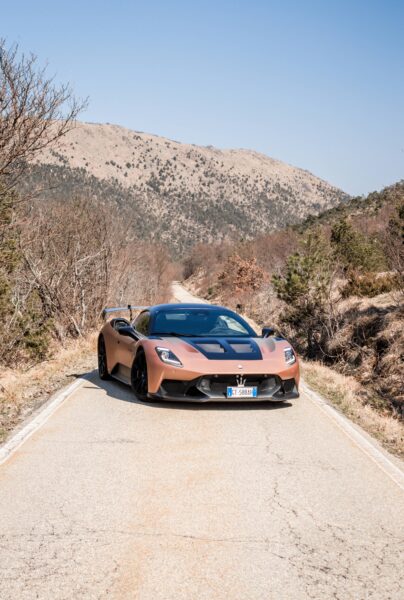
For me, this is something truly special. One of those cars that rekindles your faith in automotive, perhaps precisely because it comes from a brand that is unfairly regarded as playing second fiddle to Ferrari and Lamborghini. The GT2 Stradale is a powerful, poignant poem, rich in rhetorical flourishes. Despite being blisteringly fast (0–100 kph in 2.8 seconds and 0–200 kph in 8.9 seconds), this supercar does not revel in its headline figures. Instead, it seeks out the very sensations that drove our predecessors to chase records, pursue milestones and explore roads that would soon give way to purpose-built circuits. From road to track and back again, or, more accurately, on both road and track, following in the footsteps of the great champions who seem to watch over us proudly. Because, by the time I have stepped out of the car and cracked my back, I am already imagining where I will drive tomorrow. Cars like this do not come along every day. But how I wish every day could be spent with cars like this.
MASERATI GT2 STRADALE
Engine V6 cylinder Twin-Turbo, 3.000 cc Power 640 hp @ 7.500 rpm Torque 720 Nm @ 3.000-5.500 rpm
Traction Rear Wheel Drive Transmission 8-Speed Automatic Gearbox Weight 1.365 kg
0-100 kph 2,8 sec Top Speed 324 kph Price from €312.000 Production 914 units


Related tags to article


